March - Sea beans, stones & sharing stories
My first blog post! I’m going to try and write one every month to document thoughts and feelings about art and stories and anything else that seems like it might be interesting. This one is about sea beans, stone drawings and some experiments with natural dyeing.
Sharing stories
I have been thinking a lot this month about finding ways to share folklore and stories that are less visual. There’s a lot of representation of certain stories online as they have stronger imagery and I think some other aspects of traditional culture get overlooked. I’ve hit a stage in my understanding of Gaelic culture in particular that I am realising just how much is out there and how much I don’t know, so I figured as I learn I will share it here for anyone who may be interested!
Sea beans
Smeagol finds the One Ring… my precious

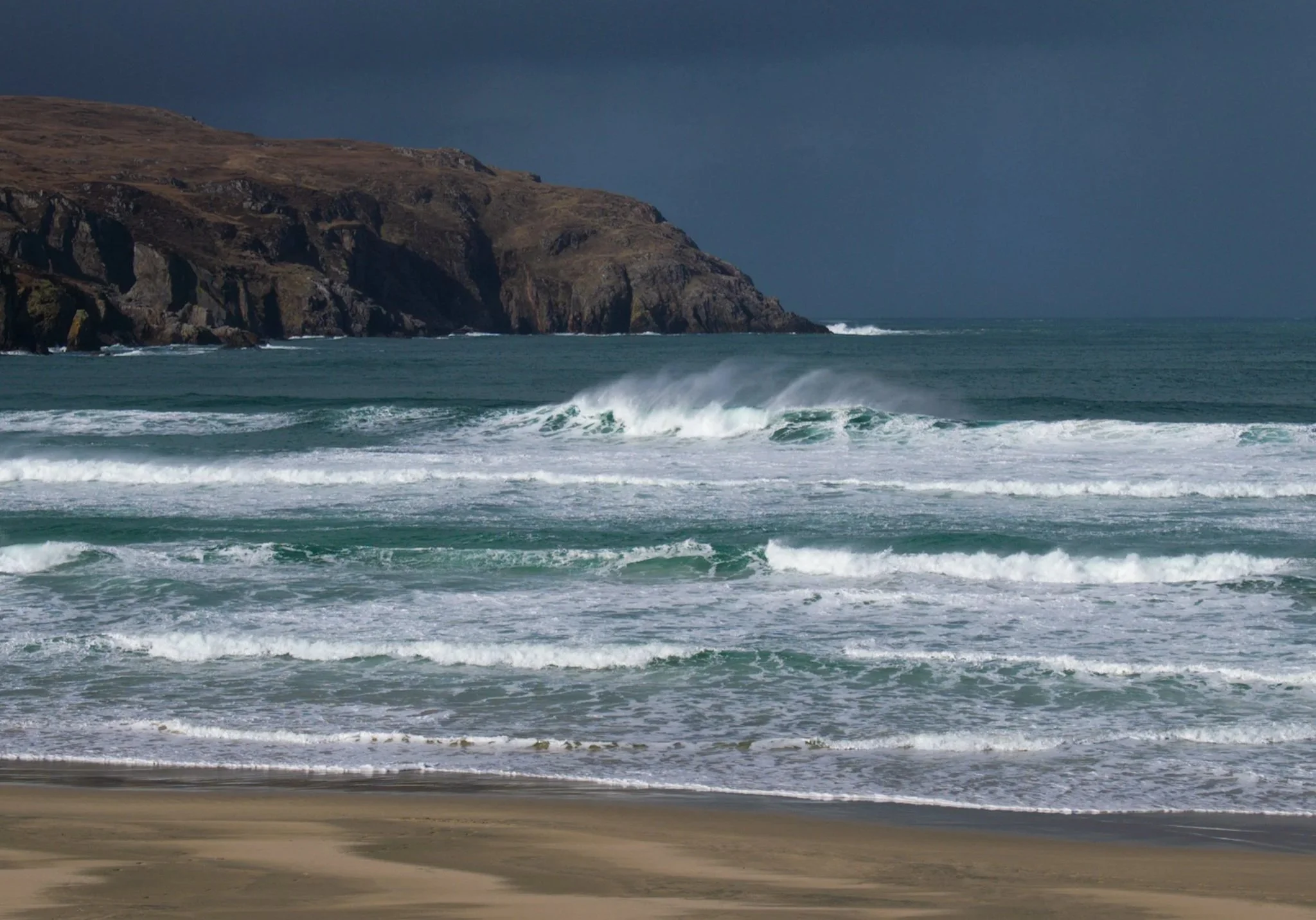
While cleaning up some plastic from Traigh Mhangurstadh I found a sea bean. The beach faces west and gets the full force of the Atlantic so is pretty bad for plastic pollution as well as dead marine mammals and seabirds. It also seems to be a good place for beachcombing and hunting for little treasures. A sea bean is a tropical seed or fruit that floats across the sea from places like Mexico and South America; it can take over a year for them to reach European coasts. The one I found is called a ‘red hamburger’ by sea bean collectors which comes from the Mucuna urens plant in South America, but there are a number of different types of bean that you can find. The main reason that I was excited about finding one is because they have quite a bit of folklore here in the Outer Hebrides and elsewhere in Scotland, Ireland, the Faroe Islands, Iceland and Norway.
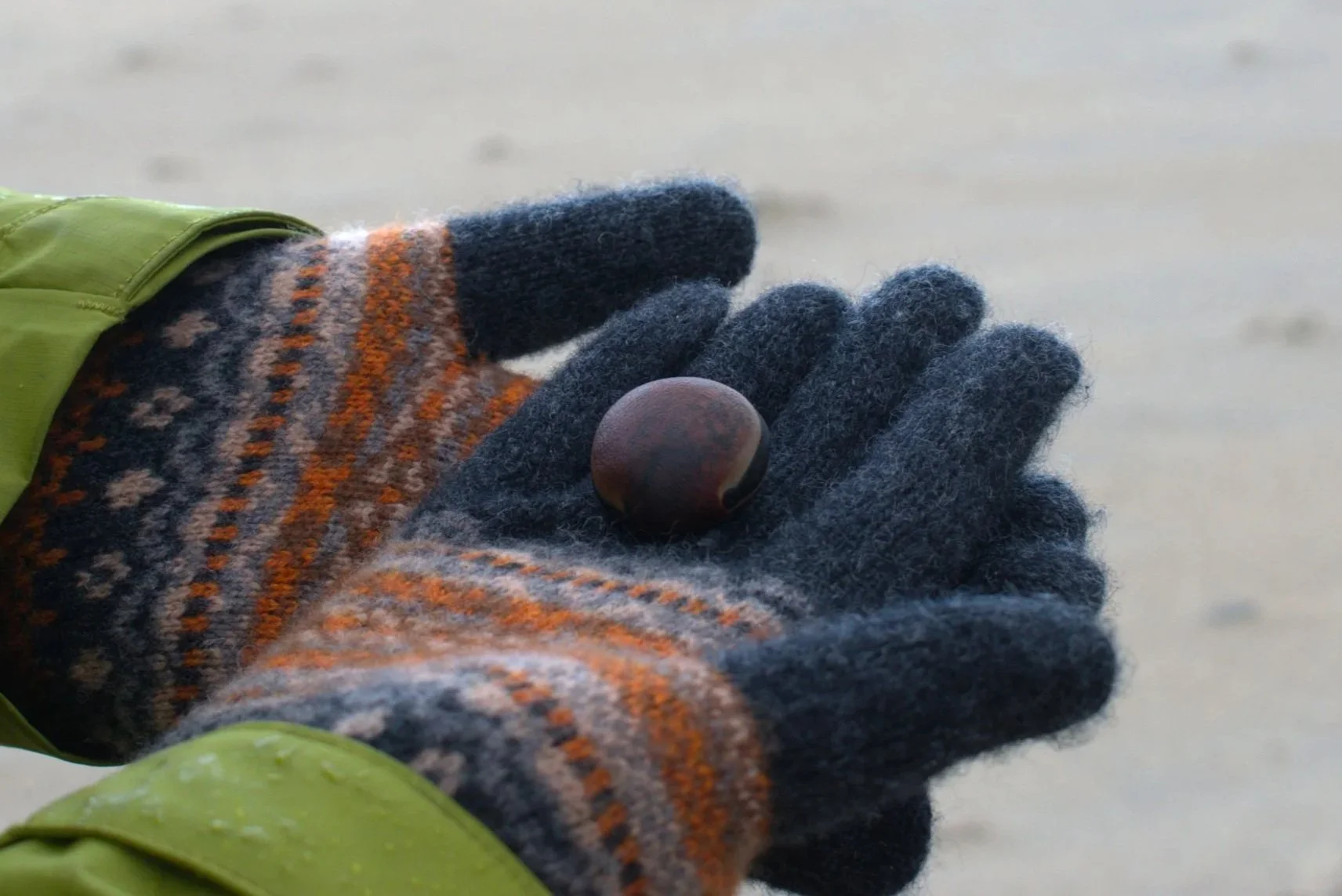
‘Red hamburger’ sea bean
Sea bean folklore
They had a variation of Gaelic names, including cnò-bhachaill, cnò-bhàchain, cnò-bhàchair, or cnù-bhachair, depending on dialect, with cnò-bhachaill suggested to be the Lewis variation. Cnò meaning ‘nut’ with the second part unclear. There were a few uses for different species of sea bean, with entada gigas often known as cnò-spuing or ‘tinder nut’ which was used as a snuff box or matchbox, either with the inside cleaned out and a cork inserted or with hinges attached. Other beans had the name cnò Mhoire or ‘Mary’s Nut’ and were used as charms in childbirth. The possession of a sea bean was also believed to protect a house from fire.
Sea beans were also used as cures – both as a physical cure, powdered and consumed to treat dysentery, and as a more supernatural cure for warding against witchcraft and an droch-shùil the evil eye (the evil eye in the Hebrides needs its own post). They could be placed in a bowl of milk or water to protect cattle or worn on a necklace by a child. Martin Martin in his 1703 book A Description of the Western Islands of Scotland says:
Malcolm Campbell, Steward of Harries, told me, that some Weeks before
my arrival there, all his Cows gave Blood instead of Milk, for several days
together: one of the Neighbours told his Wife that this must be Witchcraft,
and it would be easy to remove it, if she would but take the white Nut,
call’d the Virgin Mary’s Nut and lay it in the Pail into which she was to
milk the Cows. This advice she presently follow’d, and having milk’d one
Cow into the Pale with the Nut in it, the Milk was all Blood, and the Nut
chang’d its colour into dark brown: she used the Nut again, and all the
Cows gave pure good Milk, which they ascribe to the Virtue of the Nut.
The belief that a sea bean could protect a woman during childbirth seems to stretch across Scotland and Scandinavia. It would be put into the hand of the pregnant woman and a prayer recited by the midwife. One Hebridean prayer was recorded as follows:
Àirne Moire Kidney of Mary
‘Faic, a Mhoire Mhàthair, ‘Behold, O Mary Mother
A’ bhean ’si ris a’ bhàs.’ The woman and she near to death.’
‘Faic fèin i, a Chrìosda, ‘Behold Thou her, O Christ,
O’s ann dha t’iochd atà Since it is of Thy mercy
Fois a thoir dh’an leanabh To give rest to the child
‘S a’ bhean a thoir a spairn. And to bring the woman from her labour.
‘Faic fèin i, a Chrìosda, ‘Behold Thou her, O Christ,
O’s tu Rìgh na slàint, Since Thou art the King of health,
Thoir a’ bhean o’n eug Deliver the woman from death
Agus seun an leanabh bà, And sain the innocent child,
Thoir-sa fois dh’an fhìonan, Give Thou rest to the vine-shoot,
Thoir-sa sìth dh’a mhàthair.’ Give Thou peace to its mother.’
In the Catholic southern islands of the Hebrides the sea beans were even consecrated by priests, whereas in the northern Presbyterian islands the sea beans were still used but more covertly. The last recorded instance of a sea bean charm being used during childbirth comes from 1936.
I definitely feel a lot safer with a sea bean in my house!
Source: A Northern Charm: some popular uses of Sea-Beans by Guinevere Barlow (highly suggest reading this paper as it is very interesting and free to access: https://www.ssns.org.uk/wp-content/uploads/2020/04/Barlow_2014_Vol_46_pp_1_14-.pdf)
Stone drawings
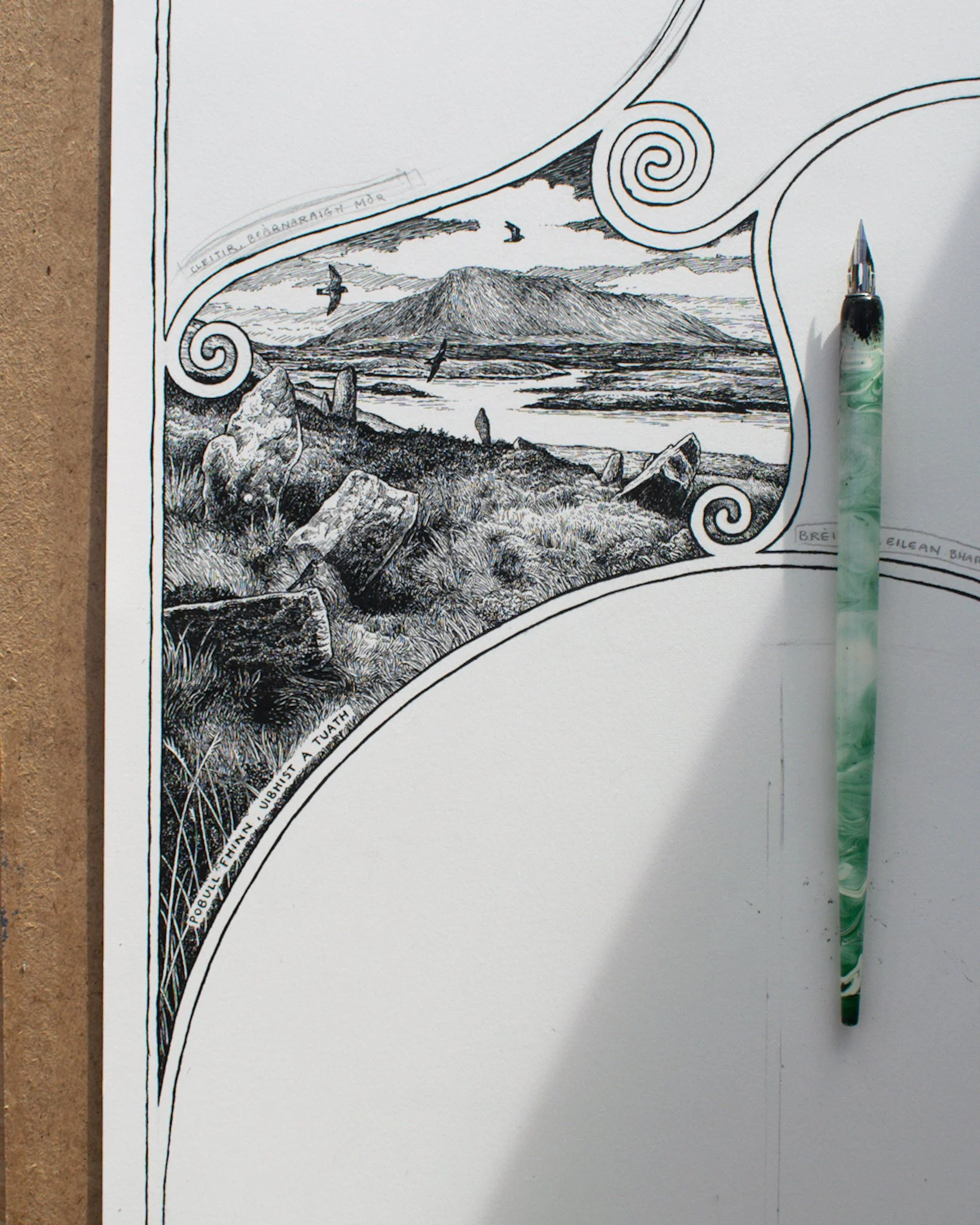
Pobull Fhinn, Uibhist a Tuath
This month I started a big drawing of some megalithic sites in the Western Isles. I actually had the idea for this a few years ago but have only got round to drawing it now, although happy that it’s happened that way as my landscape drawing skills have sharpened in the last year.
For these drawings I am focusing on tonal values to create depth – in the Pobull Fhinn section I wanted to capture how it looks when you see long pale grasses against a patch of heather as the very foreground and then lightening in tone towards the mountain. It’s a long view from that stone circle so creating a sense of depth was important. For the Cleitir section I wanted to focus on the stone textures, the stone in the foreground has the most interesting pattern of any standing stone I’ve seen, a unique flowing texture that has an eye or yonic shape in middle. I would love to know if that’s why they chose that stone! Because the textures were quite important I then wanted to make the background dark to help them stand out which is also representative of Lewis weather where it can be bright in one place and very dark just over the next hill. The background hills are made up of flowing hatching lines, they can be more loose to create contrast with the detail in the front. I’ve also been enjoying separating smaller detailed drawings with negative space borders as I know my drawings can get very busy it helps to let them breathe.
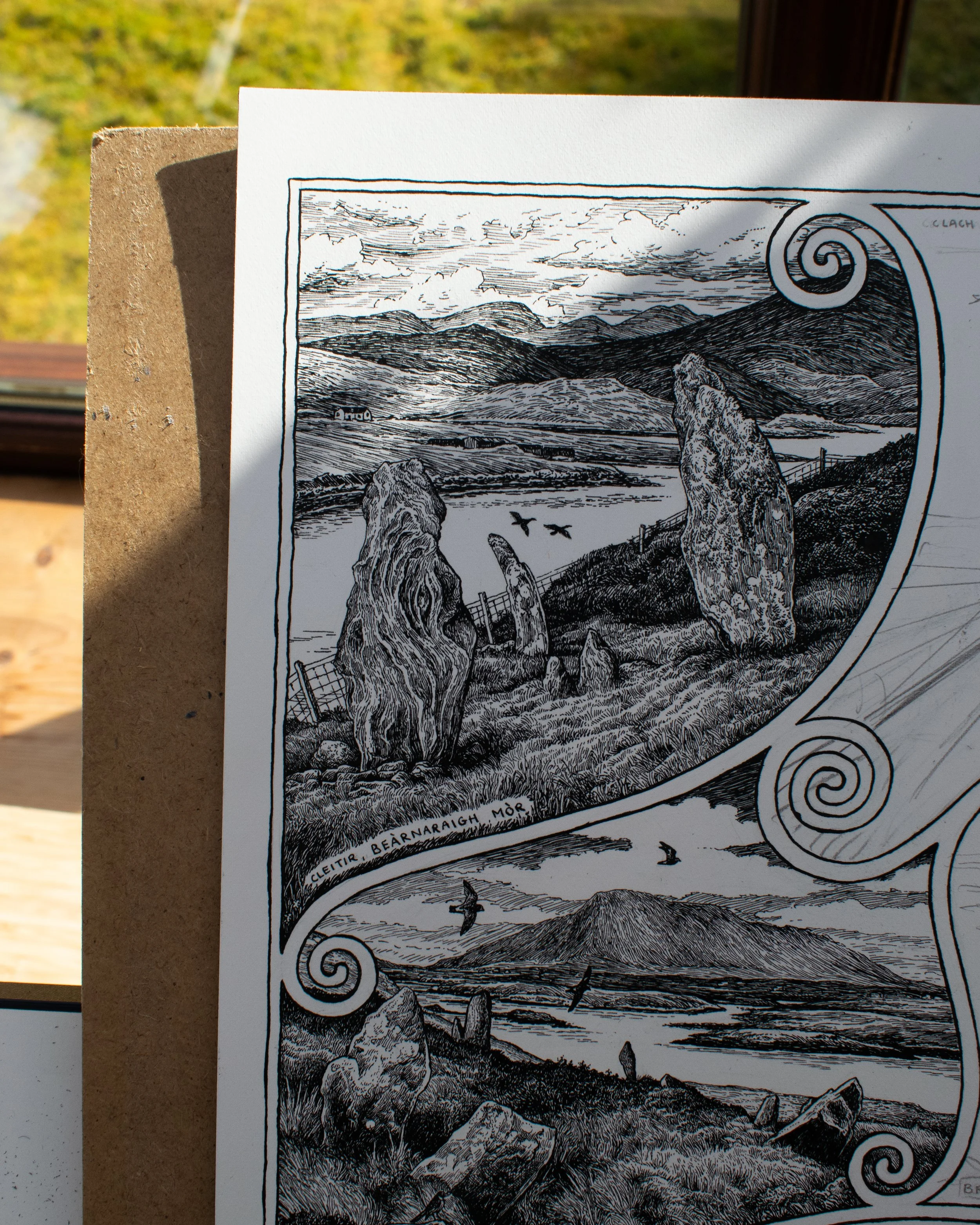
Cleitir, Beàrnaraigh Mòr
Natural dye experiments
I have big plans to make some small ceramic looms for tapestry weaving using handspun yarns from native sheep breeds from Orkney, St. Kilda, the Hebrides and Iceland as a project when I’m in Iceland next month, so I’m currently experimenting with foraged dyes, so that I have some dyed yarn to take with me. This month’s dyes have included trying to dye with laver seaweed (not effective), and heather which I have always found to be a rewarding dyestuff.
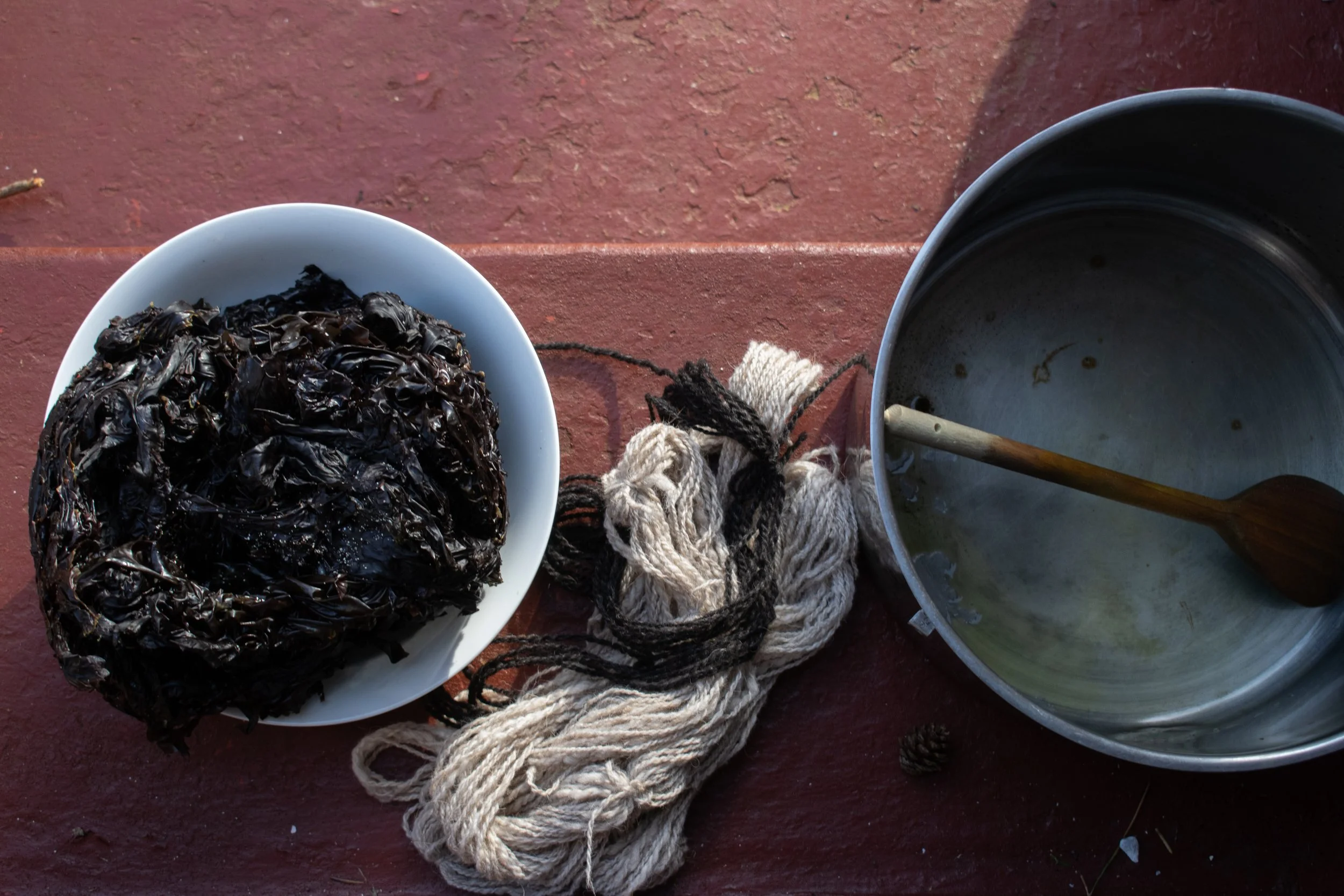
Laver, North Ronaldsay (a seaweed-eating sheep from Orkney) and Hebridean sheep yarn
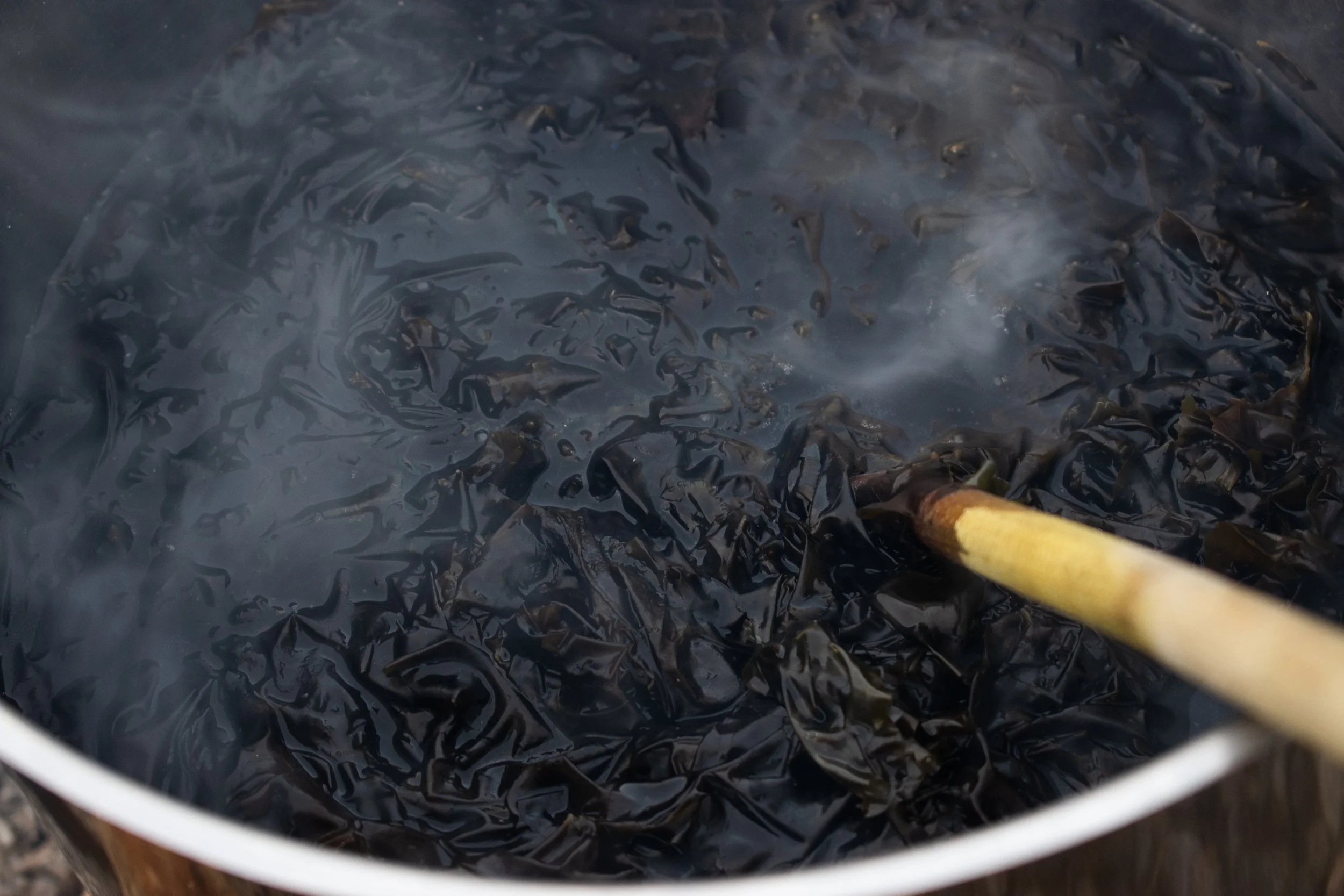
Boiling laver for 2 hours. SO STINKY, I don’t know how the Welsh stand it boiling it for 10 hours to make laverbread. There was some purple colour in the pot so I was hopeful for an interesting colour result.
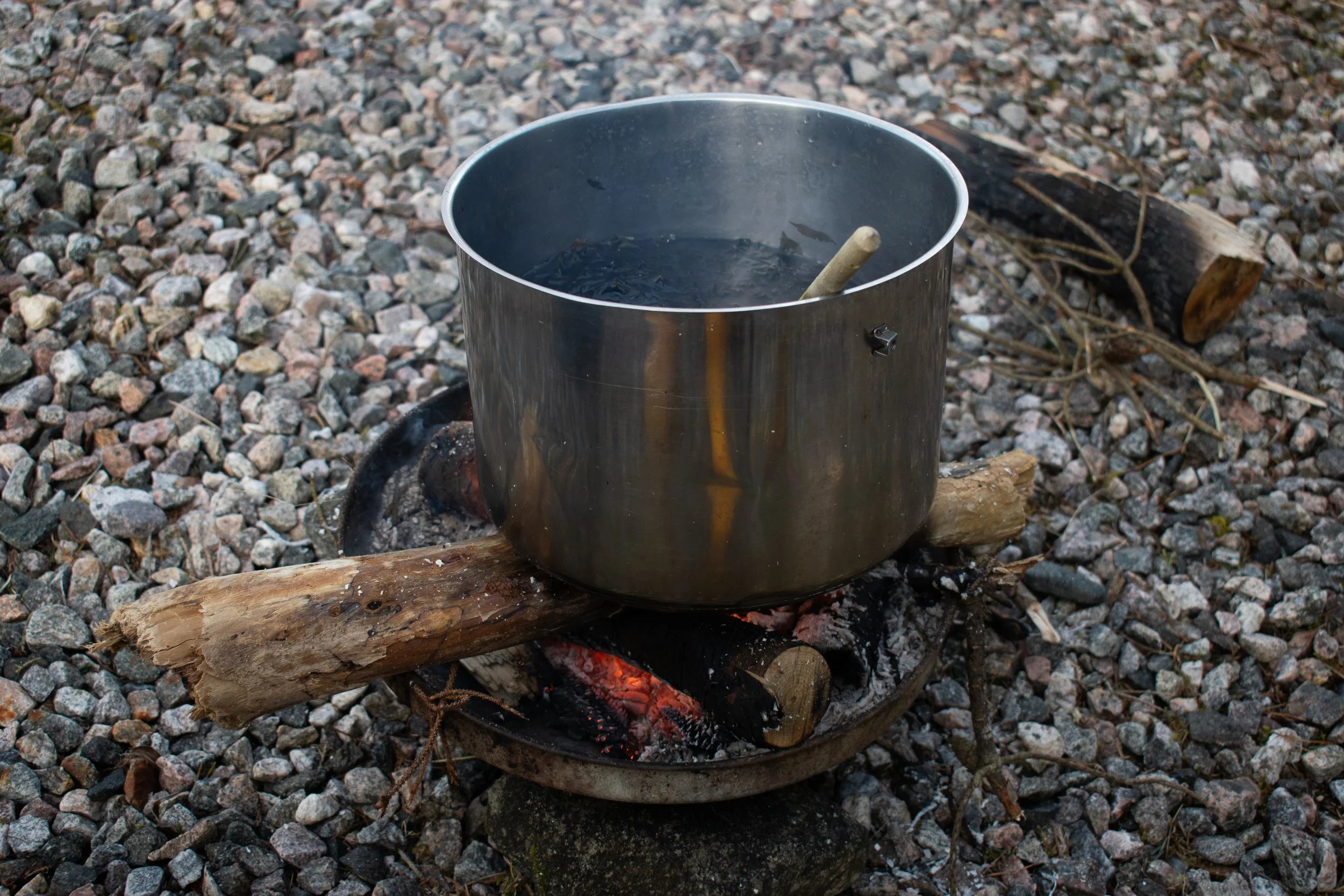
The laver was hastily exiled to a makeshift bin lid firepit outside as it was too stinky
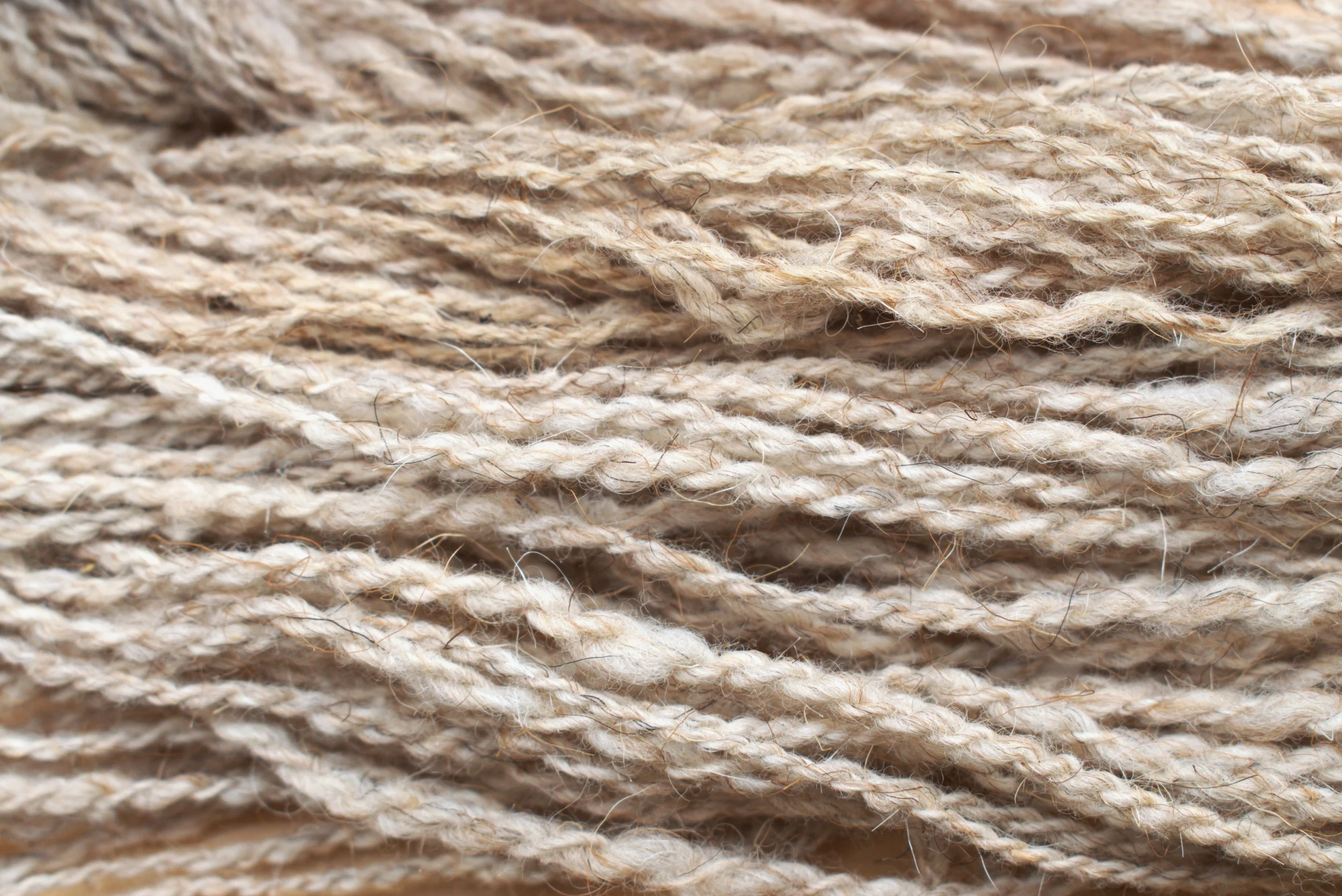
Laver dyed yarn at the top, after an overnight soak in the dye bath, only 1 shade darker than the undyed yarn at the bottom. Won’t bother with this again! The yarn was mordanted with alum.
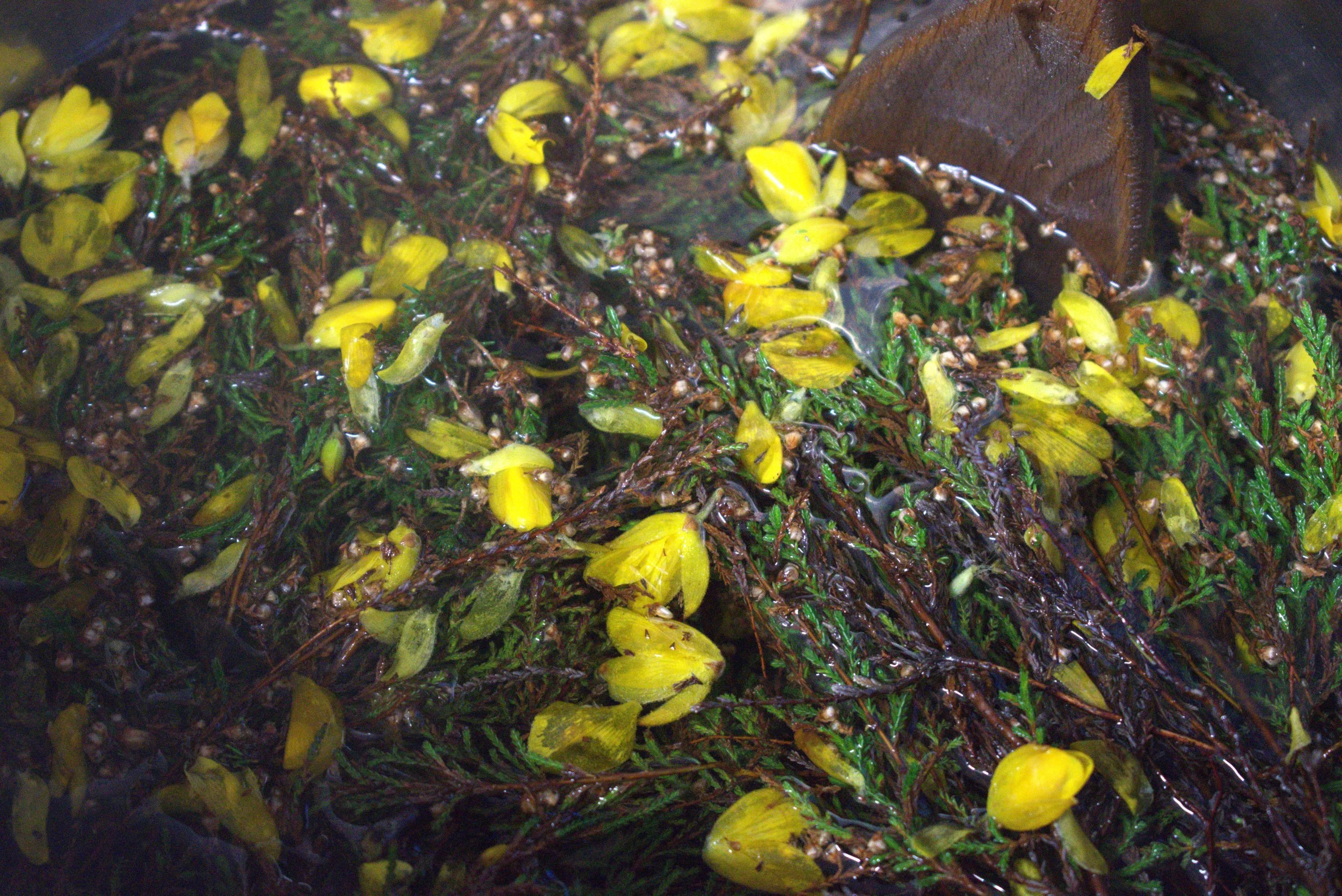
A dye bath of gorse and heather. Boiled for 20 minutes and then simmered for 2 hours, added ¼ teaspoon of iron as a colour modifier - iron ‘saddens’ the colour.
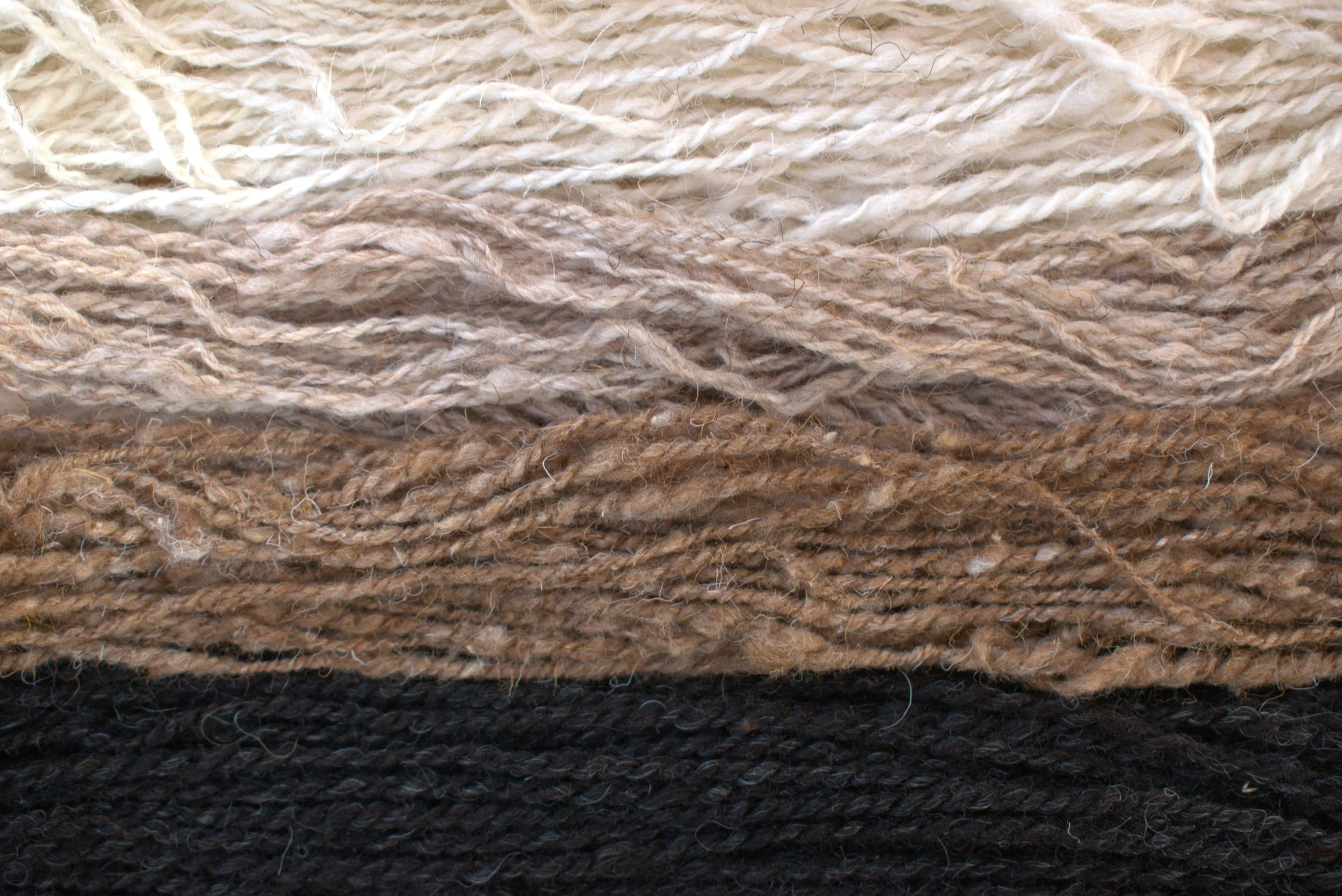
The shades of yarn, from top, descending: white North Ronaldsay, light grey North Ronaldsay, fawn Soay and black Hebridean
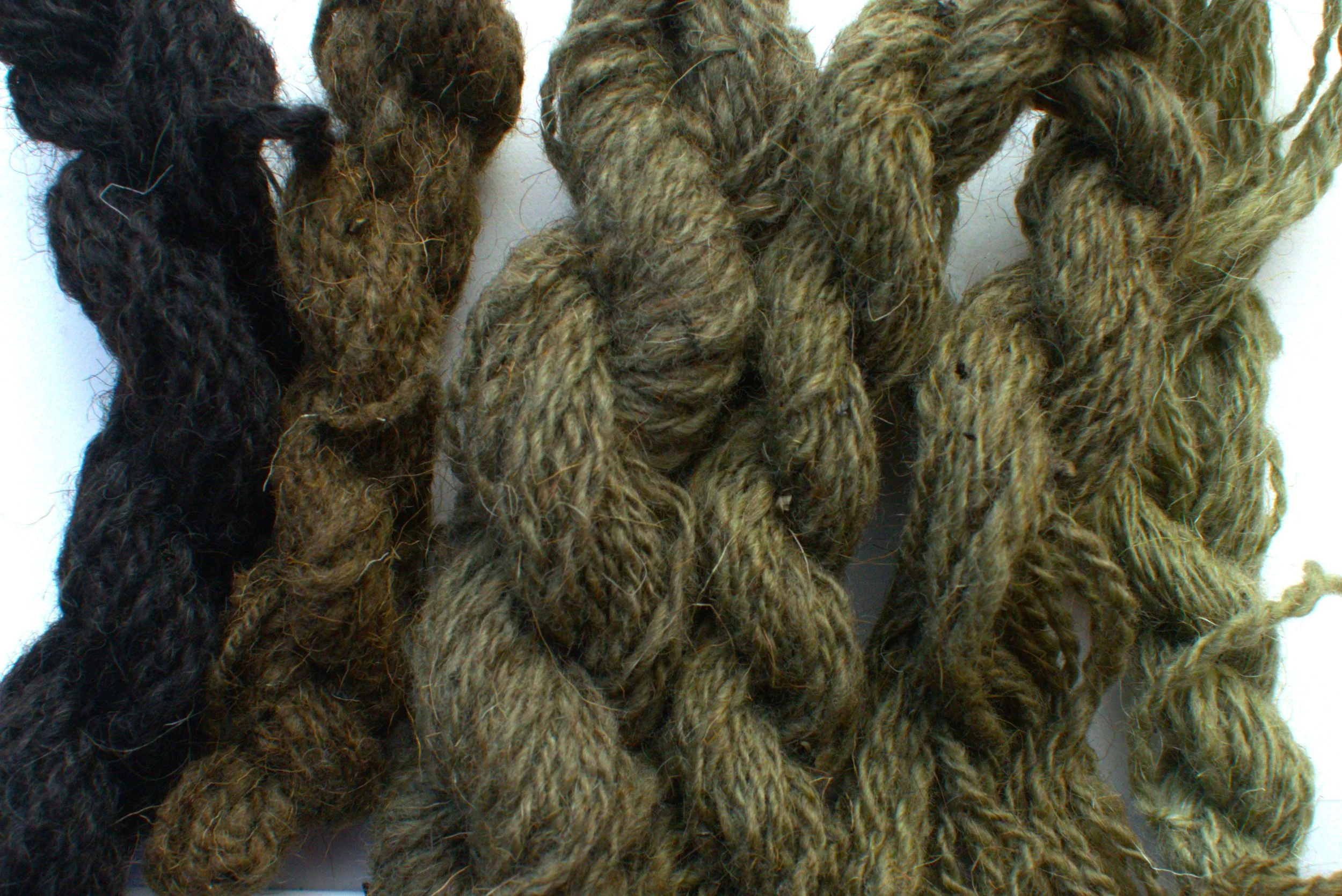
Results from left to right: Hebridean not much change as expected but I thought it may dye some of the white hairs in the yarn. Soay left in for 2 hours, North Ronaldsay grey left overnight & 7 hours, North Ronaldsay white 2 hours and taken out after the initial 20 minutes simmering.
Next month will consist of some more dye experiments, I’d like to try dulse seaweed, sea ivory lichen, bog bean and bog myrtle. And I’ll be taking some yarn to Iceland to try and find some dye plants there for the little tapestry project!
From mid April I will be traveling around Iceland with my friends & great storytellers Tom Muir & Hjörleifur Stefánsson exploring Icelandic stories & folklore so I will share as much of that here as I have time to write down.
Hester x